


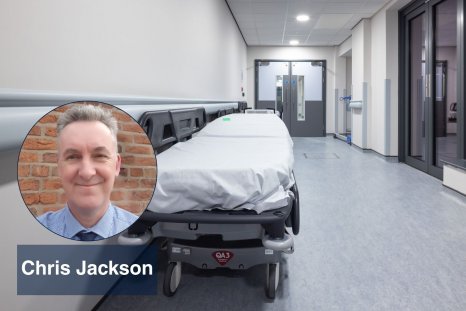
By Chris Jackson -Gradus Specification Manager Wall Protection
Healthcare buildings face relentless daily wear, both immediate and long-term. Corridors, wards, and clinical spaces are exposed to constant impact from beds, trolleys, and mobile equipment, while also needing to support strict hygiene and infection control standards. Without robust healthcare wall protection, surfaces deteriorate quickly- leading to increased maintenance costs, compromising compliance and disruption to patient care.
In modern NHS facilities, wall protection is not a design extra. It is a fundamental requirement for creating durable healthcare interiors, maintaining hygiene, and supporting long term operational performance.
Table of contents:
- Understanding HBN Guidance for Wall Protection
- HBN Guidance on Handrails
- HBN Guidance on Crash Rails, Wall Guards, and Impact Protection
- HBN Guidance on Corner Protection
- HBN Guidance on Wall Cladding and Surface Finishes
- Supporting Compliance with Gradus Wall Protection Systems
- A Trusted Partner for Healthcare Wall Protection
- Frequently Asked Questions (FAQ)
Understanding HBN Guidance for Wall Protection
Health Building Notes (HBNs) sets out best practice guidance for designing safe, resilient, and efficient healthcare facilities across the UK. Several core documents directly influence the specification of HBN compliant wall protection systems, including:
- HBN 00-04: Circulation and communication spaces (corridors, handrails, impact protection)
- HBN 00-10 Part B: Walls and ceilings (surface durability, hygiene, and impact resistance)
HBN 00-10 Part B states that impact protection products should be used to help “reduce the incidence and severity of damage to walls and partitions in healthcare buildings so that their performance is maintained”
This reinforces the need for dedicated protection systems including wall guards, crash rails, and corner guards, as a key part of maintaining compliant healthcare environments, not an optional extra.
Across HBN guidance, specifiers are consistently encouraged to select materials and systems that:
- Withstand repeated impact without cracking or deforming
- Maintain surface integrity to support effective cleaning regimes
- Support infection control, for an easy-to-maintain environment
- Reduce the need for frequent lifecycle maintenance through repairs or replacement
HBN Guidance on Handrails
HBN 00-04 highlights the importance of handrails within healthcare circulation routes, recommending that they:
- Are installed in main communication routes and departmental corridors
- Provide a firm, continuous grip
- Contrast visually with wall surfaces to aid navigation, accessibility, and support wayfinding
The guidance also recognises that handrails can be combined with wall protection systems supporting the use of the Gradus CHR160 combination rail and the D200P dual rail systems, which integrates mobility support with impact protection in a single efficient solution.
HBN Guidance on Crash Rails, Wall Guards, and Impact Protection
Healthcare corridors experience heavy, frequent contact from wheeled beds, wheelchairs, and mobile equipment. HBN guidance recommends installing:
- Crash rails or bumper rails
- Wall guards
- Corner guards
- Bed head protectors
- Protective sheets and panels
These products should be positioned to protect vulnerable areas, particularly along primary circulation routes. Gradus’ specialist Wall Protection team supports risk-based specification, ensuring the right protection is installed at the right height, in the right location, for maximum performance.
HBN Guidance on Corner Protection
Corners are among the most vulnerable areas within healthcare environments. HBN guidance clearly supports the use of corner guards and edge protection to maintain wall integrity, especially in:
- Corridors
- Bed bays
- Service routes
The Gradus CGH High Impact Corner Guard range is designed specifically for these high-risk zones, protecting against both wheeled and pedestrian traffic.
HBN Guidance on Wall Cladding and Surface Finishes
HBN 00-10 Part B emphasises that wall finishes must be:
- Smooth, continuous, and easy to clean.
- Resistant to damage that could compromise hygiene.
- Provide an impermeable barrier to moisture and contaminants.
This supports the use of full or partial wall cladding systems in areas subject to heavy use or strict infection control requirements, such as:
- Corridors and circulation routes
- Clinical and treatment spaces
- Back-of-house and service areas
Gradus recommends:
- SureProtect Endure for high traffic circulation spaces and service corridors
- SureProtect Pure for clinical and treatment areas where hygiene is the priority
Both systems contribute to hygienic easy clean wall surfaces and long-term durability.
Supporting Compliance with Gradus Wall Protection Systems
The Gradus Wall Protection Systems brochure aligns closely with HBN principles, helping specifiers understand:
- Where specialist protection is required
- How to apply risk-based specification
- Which products support durability, hygiene, and lifecycle performance
The Gradus Wall Protection range includes:
- Hygienic and durable wall cladding
- Wall guards, wall strips, and bed head protectors
- Handrails, dual rails, and combination rails
- Corner guards and edge protection
These solutions are widely used across UK healthcare wall protection projects, supporting NHS Trusts in creating compliant, resilient, and easy to maintain environments.
A Trusted Partner for Healthcare Wall Protection
With decades of experience in designing interior Wall Protection Systems, Gradus delivers solutions which support HBN guidance while delivering:
- Proven impact resistance
- Hygienic, easy-to-clean finishes
- Long-term value durability and reduced maintenance.
For architects, designers, estates teams, and healthcare professionals, choosing the right combination of handrails, crash rails, corner guards, and wall cladding is essential for protecting high-traffic hospital areas and maintaining compliant and resilient healthcare environments.
Frequently Asked Questions (FAQ)
What is HBN‑compliant wall protection?
HBN‑compliant wall protection refers to systems that meet the standards set out in Health Building Notes, particularly HBN 00‑04 and HBN 00‑10 Part B. These documents require surfaces to be durable, hygienic, impact‑resistant, and easy to clean, ensuring healthcare environments remain safe, compliant, and operationally efficient.
Why do hospitals need wall protection?
Hospitals experience constant impact from beds, trolleys, wheelchairs, and equipment. Without protection, walls deteriorate quickly, increasing maintenance costs and compromising infection control. Wall protection helps reduce hospital wall damage, maintain hygiene, and extend lifecycle performance.
Which areas of a hospital require the most protection?
- High‑risk zones include:
- Primary circulation corridors
- Wards and bed bays
- Clinical and treatment rooms
- Back‑of‑house service routes
- Corners and vulnerable edges
These are the areas where impact protection for hospitals delivers the greatest value.
What products support HBN guidance?
HBN guidance supports the use of:
- Handrails and combination rails
- Crash rails and wall guards
- Corner guards
- Bed head protectors
- Hygienic wall cladding
Gradus solutions such as CHR160, D200P, CGH corner guards, SureProtect Endure and SureProtect Pure align directly with these requirements.
How do handrails support accessibility and compliance?
HBN 00‑04 states that handrails must be continuous, easy to grip and visually contrasting to support safe navigation. Combination rails and dual rails provide both mobility support and wall protection, making them ideal for busy NHS circulation routes.
What is the difference between SureProtect Endure and SureProtect Pure?
SureProtect Endure, designed for high‑traffic areas, offering textured, impact‑resistant protection.
SureProtect Pure, ideal for clinical spaces where hygiene and cleanability are the priority.
Both systems contribute to hygienic easy‑clean wall surfaces.
How does wall protection support infection control?
By preventing cracks, dents and surface damage, wall protection maintains a smooth, impermeable finish that can be cleaned effectively. This reduces the risk of bacteria harboring in damaged surfaces and supports NHS infection‑control protocols.
Can Gradus help with specifying the right products?
Yes, the Gradus Wall Protection team provides risk‑based wall protection specification, ensuring the right products are installed at the correct height and location for maximum performance and HBN compliance.
To learn more about Gradus wall protection systems for healthcare, explore the full range or speak to a member of the Gradus team today by calling 01625 428 922, emailing imail@gradus.com or visiting www.gradus.com