


How Does Interior Building Protection Improve Patient Care in Healthcare Facilities?
Interior building protection improves patient care by reducing damage, supporting infection control, and minimising disruption in healthcare environments. Durable wall protection systems help maintain hygienic surfaces, lower maintenance costs, and create safer, more welcoming spaces for patients, staff, and visitors.
Contents
• Why does interior building protection matter in healthcare?
• What challenges do healthcare facilities managers face?
• How does wall protection support better patient care?
• Why choose Gradus wall protection solutions?
• Frequently asked questions about Healthcare Wall Protection
Why Does Interior Building Protection Matter in Healthcare?
Interior building protection is essential in healthcare because facilities operate in high-pressure, high-traffic environments with strict hygiene requirements. Without adequate protection, damage can quickly escalate into costly and disruptive issues.
Healthcare buildings experience constant wear from:
• Beds, trolleys, and wheelchairs
• High footfall from staff, patients, and visitors
• Frequent cleaning and infection control processes
Common risks of unprotected walls include:
• Increased repair and redecorating costs
• Infection control concerns from damaged surfaces
• Poor visual standards that impact patient perception
• Operational disruption in clinical areas
A proactive protection strategy helps facilities teams prevent damage before it occurs, rather than reacting to it after the fact.
What Challenges Do Healthcare Facilities Managers Face?
Healthcare facilities managers must balance building performance with patient safety, often under significant operational constraints.
Key challenges include:
• Limited budgets requiring cost-effective, long-term solutions
• Time pressures reducing opportunities for maintenance work
• Live environments where disruption must be minimised
• Strict compliance requirements around hygiene and safety
These competing priorities make it difficult to maintain building standards without a clear and strategic approach to protection.
How Does Wall Protection Support Better Patient Care?
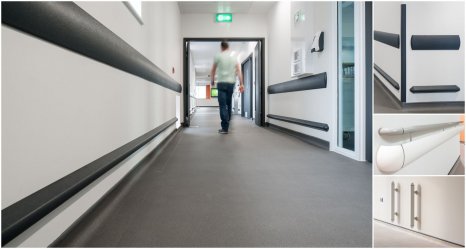
Wall protection plays a critical role in maintaining safe, functional, and welcoming healthcare environments. It goes beyond aesthetics to directly support patient outcomes and operational efficiency.
Wall protection systems help to:
• Maintain cleanable, hygienic surfaces
• Reduce ongoing maintenance and lifecycle costs
• Protect walls from impact damage and wear
• Support infection prevention and control protocols
• Improve the overall appearance of clinical environments
When buildings are properly protected, facilities teams can focus more on supporting patient care rather than dealing with reactive maintenance issues.
Why Choose Gradus Wall Protection Solutions?
Gradus wall protection systems are specifically designed for demanding healthcare environments, where durability and hygiene are critical.
Key benefits include:
• Designed for high-traffic, high-impact areas
• Durable and impact-resistant materials
• Easy-to-clean surfaces that support hygiene standards
• Wide choice of colours and finishes to enhance interiors
• Installation with minimal disruption to live environments
By investing in tailored protection solutions, healthcare facilities can extend the lifecycle of their interiors and reduce long-term costs.
Key Takeaways
• Interior building protection reduces damage, disruption, and long-term costs
• Wall protection supports infection control and hygiene standards
• Protected environments improve patient experience and perception
• Proactive strategies allow facilities teams to work more efficiently
Frequently Asked Questions About Healthcare Wall Protection
What is wall protection in healthcare buildings?
Wall protection includes durable systems designed to prevent damage from equipment, foot traffic, and cleaning processes.
Why is wall protection important for infection control?
Smooth, damage-resistant surfaces are easier to clean and help reduce areas where bacteria can accumulate.
Where should wall protection be installed?
It is most effective in high-traffic areas such as corridors, patient rooms, entrances, and service zones.
Does wall protection reduce maintenance costs?
Yes. It reduces the need for frequent repairs and redecorating, lowering overall lifecycle costs.
Download your copy of the Healthcare sector brochure
Our expert insights help you identify hidden risks, reduce operational costs, and enhance safety for patients, staff, and visitors, giving you confidence that your spaces are designed to perform when it matters most.